

Truck Accident Loans
Truck Accident Lawsuit Loans Provide Fast, Non‑Recourse Funding
Truck accident lawsuit loans provide injured plaintiffs with immediate financial relief while their attorney continues negotiating their injury settlement. Non‑recourse funding means you only repay if you win.
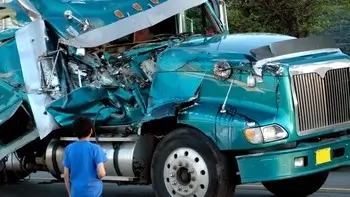
Truck Accident Loans
Get Immediate Access To Your Settlement Money
Pre-settlement truck accident loans can provide immediate financial relief to pay bills and help you keep your head above water until your injury settlement has been finalized.
Check Your State:
Truck Accident Loan Availability By State
Truck Accident Lawsuit Loans For Injured Plaintiffs
Seriously injured plaintiffs with pending truck accident lawsuits learned a long time ago that fast, risk-free truck accident loans from TriMark Legal Funding—one of America’s oldest and best pre-settlement funding companies—can be an absolute game-changer when it comes to turning the tables on stubborn insurance companies and actually receiving full, fair compensation for the injuries you received.
Truck accident loans and car accident loans from TriMark can provide the financial breathing room that injured, out-of-work plaintiffs and their attorneys need to negotiate the maximum compensation your injuries deserve.
With a pre-settlement cash advance on your truck accident claim, you could regain control of your finances and cover living expenses, rent, insurance, or other urgent expenses that might come up.
In other words, you can spend your recovery time recovering, rather than worrying and stressing out about money 24/7.
And that’s despite any delay tactics, legal jockeying, or dirty tricks the other guy’s insurance company might try to throw at you. At the same time, lawsuit funding can give your legal team extra time to negotiate the best, most appropriate settlement possible.
Truck Accident Loans: Get The Cash You Need FAST!
Apply now; receive funds as soon as tomorrow! ┼
Truck Accident Pre-Settlement Loans: For Plaintiffs Only
If the truck accident and your injuries were caused by the negligence or recklessness of a truck driver or trucking company, and you filed a civil lawsuit against them to receive fair compensation for your injuries, in legal jargon, that makes you the plaintiff.
Truck accident pre-settlement loans from TriMark Legal Funding are specifically designed to meet the unique needs, circumstances, and financial requirements of injured plaintiffs, and plaintiffs are the only ones who can get them.
Pre-Settlement Loans Are Fast & Easy
Lawsuit funding on an 18 wheeler accident, a big rig collision, a semi truck crash, or a tractor trailer accident can happen fast; so fast that if you apply for a truck accident loan right now, you could receive the funds you need as quickly as tomorrow.┼
Motor vehicle accident loans from TriMark are designed to alleviate financial pressure and stress, with no credit checks, employment or income requirements, and no monthly payments.

How Truck Accident Lawsuit Loan Repayment Works
You ONLY repay truck accident loans after you win your lawsuit.
All of the legal funding TriMark provides is non-recourse. That means you don’t have to repay your lawsuit cash advance unless—and until—you win your case. If you lose, you can keep the money we advanced and owe nothing. Now, is that a zero-risk truck accident loan, or what?
Ready to get started?
Eligible Truck accidents
- 18 Wheeler Accident
- Amazon Truck Accident
- Average Truck Accident Settlement
- Back Over Accident
- Backing Up Accident
- Big Rig Accident
- Boom Truck Accident
- Box Truck Accident
- Brake Failure Truck Accident
- Bridge Strike Accident
- Broadside Collision
- Bucket Truck Accident
- Cattle Truck Accident
- Cement Truck Accident
- Commercial Truck Accident
- Commercial Vehicle Accident
- Delivery Truck Accident
- Dump Truck Accident
- Failure to Yield Accident
- Falling Debris Truck Accident
- Fatal Semi Truck Accident
- FedEx Truck Accident
- Fire Truck Accident
- Freeway Accident
- Fuel Tanker Accident
- Garbage Truck Accident
- Gas Truck Accident
- Gravel Truck Accident
- Hazardous Cargo Spill Accident
- Hazmat Tanker Truck Accident
- Head On Collision
- Highway Accident
- Improperly Loaded Truck Accident
- Jackknife Truck Accident
- Lane Change Accident
- Left Turn Accident
- Log Truck Accident
- Lost Load Truck Accident
- Mechanical Failure Truck Accident
- Merging Accident
- Multi Vehicle Truck Accident
- Override Crash
- Oversized Load Truck Accident
- Railroad Crossing Accident
- Rear End Collision
- Right Turn Accident
- Runaway Trailer Accident
- Runaway Truck Accident
- Semi Truck Accident
- Side Impact Truck Accident
- Sideswipe Collision
- T Bone Accident
- Tanker Truck Accident
- Texting While Driving Accident
- Tractor Trailer Accident
- Trailer Detachment Accident
- Truck Rollover Accident
- Truck Tire Blowout Accident
- Tunnel Strike Truck Accident
- U Haul Trailer Accident
- U Haul Truck Accident
- Underride Crash
- UPS Truck Accident
- USPS Truck Accident
- Walmart Truck Accident
- Wide Turn Accident
In This Article
- Truck Accident Lawsuit Loans
- Truck Accident Pre-Settlement Loans: For Plaintiffs Only
- How Truck Accident Lawsuit Loan Repayment Works
- FAQ: Truck Accident Lawsuit Loans
- Pre-Settlement Truck Accident Loans Are A 3-Step Process
- Are Truck Accident Loans Available In Every State?
- Get A Truck Accident Loan Now
Frequently Asked Questions
FAQ: Truck Accident Lawsuit Loans
📄 How do truck accident lawsuit loans work, and when can injured victims actually get funded?
Truck accident lawsuit loans — sometimes called truck accident pre‑settlement funding or semi‑truck crash cash advances — are financial tools that help injured plaintiffs cover urgent expenses while their attorney fights for a fair settlement.
Unlike traditional loans, these advances are non‑recourse, meaning repayment only happens if your case wins or settles. If the case is lost, you owe nothing. This structure exists because truck accident litigation is uniquely complex: multiple defendants, federal safety regulations, black‑box data, commercial insurance layers, and FMCSA compliance issues all slow cases down.
Regulatory organizations like the Federal Motor Carrier Safety Administration (FMCSA) document the requirements that commercial carriers must meet, including maintaining logs, drug/alcohol testing records, insurance, and more.
A lawsuit funding company will review your attorney’s liability theory, police reports, medical records, and insurance coverage to estimate case value. Once approved, funds can be wired in within 1-24 hours (same day or next business day).
Plaintiffs typically use the money for rent, medical bills, vehicle replacement, childcare, or simply staying afloat while unable to work. Because truck accident settlements involve severe and sometimes catastrophic injuries, long‑term treatment, and high policy limits, cases take longer than standard auto claims. That’s why lawsuit funding exists — to level the playing field so victims aren’t forced to accept lowball offers.
When used strategically, pre-settlement cash advances can give your attorney the time and leverage needed to secure maximum compensation.
📄 How much money can I get from a truck accident lawsuit loan?
Lawsuit loan funding amounts typically range from $1,000 to $500,000+, depending on the anticipated net case value.
The amount you are approved for will depend on multiple factors, including the amount you request, the severity and permanence of your injuries, how long you were or will be unable to return to work, the number of surgeries you have received or will require, your degree of liability (if any), the degree of negligence or recklessness of the truck driver and trucking company, how many people were injured and are seeking compensation, the total amount of available insurance coverage, and the payoff amount of any prior funding you may have received prior to today.
Because truck accidents often involve $1M+ commercial policies and frequently include $5M to $10M umbrella policies, plaintiffs can typically qualify for higher settlement advances than with a standard car accident loan.
Key factors used to determine the approved funding amount include:
🔸 Medical treatment
(ER visits, number and types of surgeries, long‑term care, etc.)
🔸 Lost wages
🔸 Future earning capacity
🔸 FMCSA violations
🔸 Negligent hiring/retention
🔸 Black‑box data
🔸 Traffic cam / Other video of event
🔸 Dashcam footage & event data
🔸 Police report
🔸 Police accident investigation
🔸 How many defendants share liability
According to the Insurance Institute for Highway Safety (IIHS), large trucks cause disproportionately severe injuries to passenger-vehicle occupants due to significant mismatches in size, height, weight, and braking capacity.
Plaintiffs with severe, debilitating, or catastrophic injuries — crush injuries, extensive burn injuries, spinal cord injuries, traumatic brain injuries, traumatic amputations, paralysis, paraplegia or tetraplegia, or wrongful death claims — may qualify for significantly more.
Legal funding companies will never advance the full estimated settlement. TriMark Legal Funding can typically offer up to about 20% of the anticipated net settlement value. This ensures the plaintiff receives the majority of the final settlement payout.
📄What documents does my attorney need before I can be approved for a truck accident lawsuit loan?
Cases eligible for truck accident lawsuit loans are usually evidence‑heavy, and legal funding companies like TriMark need sufficient documentation to assess liability, injuries, and insurance coverage before approving a lawsuit advance.
The process is fast, but it still requires a minimum set of records from your attorney. Typically, the documents we request will include:
🔸 Police crash report (often the foundation of liability)
🔸 Medical records (ER visits, imaging & surgical reports, specialists, ongoing treatment, and prognosis
🔸 Attorney’s intake notes and liability summary
🔸 Insurance information & policy limits (for all defendants)
🔸 Photos, videos, dashcam footage, or black‑box data (if available)
🔸 Any evidence of FMCSA violations (Hours‑of‑Service violations, maintenance failures, etc.)
The FMCSA’s Compliance, Safety, Accountability (CSA) program outlines the safety categories that often become central in litigation — unsafe driving, fatigued driving, vehicle maintenance, and controlled substances and provides their CSA Factsheet for easy reference.
Lawsuit funding companies don’t need every piece of evidence your attorney will eventually gather, but they do need enough to understand the strength of liability against the defendant so they can estimate the likely settlement range.
If your attorney is responsive, approvals can happen the same day you apply for funding. If the law firm is large or the case is in its early stages, it may take a bit longer to gather the essentials. The more complete the documentation, the higher the potential funding amount and the faster the turnaround.
📄 What can I use a truck accident pre‑settlement loan for, and are there any restrictions on how I can use the money?
Truck accident loans are designed to help injured accident victims survive financially while their case moves through the legal system. But since everyone’s circumstances are different, ‘survive financially’ can mean different things to different people.
In addition to being non‑recourse and requiring no monthly payments, TriMark places no restrictions or limitations on how you may use the funds. It’s your money, after all, and no one knows your situation better than you do, so you are free to use your settlement advance however you see fit.
Most plaintiffs use the money for:
🔸 Income replacement
🔸 Monthly rent or mortgage
🔸 Monthly car payments
🔸 Auto, health & life insurance premiums
🔸 Monthly bills, groceries, utilities, etc.
🔸 Medical bills, co‑pays & prescriptions
🔸 Household expenses
🔸 Childcare and family support
🔸 Vehicle repairs or replacement
🔸 Emergency travel
🔸 Relocation or temporary housing
🔸 Anything else you need
Severe injuries from large‑truck crashes often lead to long‑term disability, chronic pain, and extended time away from work, if you are able to return to work at all — all of which have the potential to create enormous financial pressure and strain.
Legal funding exists to relieve that pressure. You don’t need to justify your expenses, and the funding company doesn’t monitor how the money is spent.
The only real ‘restriction’ is strategic, and it’s in your best interest to abide by it: Your attorney may advise you to borrow only what you truly need. That’s because repayment will come from your settlement, so keeping the advance reasonable ensures you walk away with the largest possible net recovery.
📄 Why are truck accident lawsuit settlements usually higher than regular car accident settlements, and how does that affect funding eligibility?
Truck accident settlements are typically much larger than standard auto accident settlements. This is because the injuries are usually more severe, the vehicles are heavier, the stakes are higher, the damage is greater, and the defendants are commercial carriers with large insurance policies.
A fully loaded truck that is involved in a tractor-trailer collision can weigh up to 80,000 pounds (40 tons). Just the sheer mass, the physics of motion, and the laws of inertia can generate devastating forces during impact.
Commercial carriers also operate under federal regulations, meaning attorneys must investigate Hours‑of‑Service compliance, maintenance logs, drug/alcohol testing, and black‑box (ECM) data. When violations are found, liability strengthens — and settlement values rise.
Higher settlement potential directly impacts funding eligibility. Because lawsuit advances are non‑recourse, funding companies only advance money when the case has a strong likelihood of recovery.
Truck accident cases often involve:
🔸 Catastrophic injuries (TBI, cervical spine and spinal cord damage, crush injuries, amputations, paralysis, paraplegia, tetraplegia, etc.)
🔸 Permanent disability or long‑term medical care
🔸 Wrongful death lawsuit claims
🔸 Multiple defendants with layered insurance coverage
🔸 Clear negligence (fatigue, speeding, improper loading, mechanical failure)
These factors increase the projected settlement value, which increases the amount of funding available. Plaintiffs in truck accident cases often qualify for significantly larger advances than those in standard auto collisions because the underlying case value is so much higher.
📄 Can I get additional funding later if my injuries worsen or my truck accident case increases in value?
Most likely — “second‑round” or “additional” funding is extremely common in truck accident lawsuit loans, especially when injuries turn out to be more serious than initially expected. Many plaintiffs start with conservative treatment, only to later require surgery, injections, long‑term physical therapy, or specialist care.
When new medical records show increased damages — or when your attorney uncovers stronger liability evidence such as black‑box data, incriminating social media posts, or evidence of testing while driving, for example — the projected settlement value rises.
Funding companies can reevaluate your case and potentially offer an additional advance. To qualify for more funding, your attorney typically needs to provide:
🔸 Updated medical records
🔸 New imaging (MRI, CT, X‑rays)
🔸 Surgical reports for newly completed surgeries
🔸 Revised liability analysis
🔸 Updated insurance information
🔸 Any new evidence strengthening the case
As long as the total funding remains within a safe percentage of the projected settlement (usually 10–20%), additional advances are often approved quickly. This ensures you remain financially stable while your attorney continues building the strongest possible case.
📄 How do medical treatment, surgeries, or long‑term injuries impact my eligibility for a truck accident cash advance?
The extent, duration, and consistency of medical treatment are one of the biggest drivers of both case value and funding eligibility in truck accident lawsuit loans.
Because commercial vehicle crashes often cause catastrophic injuries, funding companies pay close attention to your medical records, imaging, and treatment plan.
Common injuries that increase case value — and therefore funding potential — include:
🔸 Traumatic brain injuries (TBI)
🔸 Hypoxic & anoxic brain injuries
🔸 Herniated discs
🔸 Spinal & spinal cord injuries
🔸 Large-area crush injuries
🔸 Large-area burn injuries
🔸 Fractures requiring surgery
🔸 Shoulder, knee, or hip injuries
🔸 Internal organ damage
🔸 Paralysis
🔸 Permanent disability or chronic pain
Funding companies typically look for:
🔸 Consistent treatment (no long gaps or skipped appointments or treatments)
🔸 Clear causation linking injuries to the crash
🔸 Imaging results (MRI, CT, X‑rays)
🔸 Surgical recommendations or completed surgeries
🔸 Specialist evaluations (orthopedic, neurologic, pain management)
If your injuries worsen — for example, if conservative care fails and surgery becomes necessary — your case value increases. That often makes you eligible for additional funding later in the case.
Medical documentation is the backbone of both settlement negotiations and funding approval. The more complete and consistent your treatment, the stronger your case appears to underwriters, and the more financial support you may qualify for.
📄 What types of truck accident cases qualify for pre‑settlement funding?
Nearly every commercial‑vehicle crash with an active attorney‑represented injury claim can qualify for funding, but some cases are especially strong because they involve clear liability, severe injuries, or federal safety violations. Common qualifying cases include:
🔸 18‑wheeler accidents
🔸 Rear‑end collisions
🔸 Head-on collisions
🔸 Underride crash / Override crashes
🔸 Semi‑truck collisions
🔸 Tractor trailer collisions
🔸 Side impact collisions
🔸 Jackknife accidents
🔸 Truck tire blowouts
🔸 Runaway truck / Brake failure incidents
🔸 Wide‑turn / Right turn accidents
🔸 Lost‑load / Cargo spill
🔸 Runaway trailer accidents
🔸 Fuel spill crashes
🔸 Delivery truck / Box truck accidents
(UPS, FedEx, USPS, Amazon, Walmart)
🔸 Tanker truck accidents
🔸 Tunnel strike / Bridge strike collisions
🔸 U-Haul rental truck accidents
🔸 Rollover truck accidents
🔸 Dump truck collisions
🔸 Garbage truck accidents
🔸 And many others
There are about 500,000 police‑reported large truck crashes each year, according to the Federal Motor Carrier Safety Administration.
The National Safety Council reported that in 2023, 5,472 people died in large truck crashes, and an additional 153,452 serious injuries occurred. Interestingly, that is an 8% decrease in fatalities from 2022’s 5,969.
Because commercial trucks operate under strict federal regulations — Hours‑of‑Service rules (truck driver sleep requirements), maintenance requirements, CDL standards, and drug/alcohol testing — violations often strengthen liability.
Like other cases eligible for personal injury lawsuit loans, negligence-based commercial truck accident cases that cause severe injuries, catastrophic or life-altering injuries, multiple surgeries, permanent disability, or wrongful death often qualify for quite substantial legal funding amounts.
If you were injured in an accident with a truck or other commercial vehicle, you were not at fault, you have retained a contingent fee attorney, and they can show clear liability against a sufficiently insured defendant (common with commercial carriers), you will most likely qualify for pre-settlement funding.
Apply now to see how much you qualify for. It’s fast, easy, and free to apply, with no obligation.
📄 Does getting a truck accident lawsuit loan affect my case or settlement amount?
No — obtaining pre‑settlement funding does not affect your case value, your attorney’s strategy, case management, or your ability to recover damages.
Lawsuit funding is completely separate from the legal process. Your attorney continues to negotiate with the insurance carrier as before.
One factor that can affect your case is financial pressure.
According to LendingClub, 60% of Americans live paycheck to paycheck, meaning they have no significant savings or emergency fund. Insurance companies know that.
They also know that injured victims often can’t work, can’t pay rent, and can’t afford to wait months or years for a fair settlement. They use this leverage to financially-strapped injury victims into accepting low, pennies-on-the-dollar settlement offers.
The National Highway Traffic Safety Administration reported that there were an estimated 528,177 large trucks involved in police-reported traffic crashes nationwide during 2023. The report also documents interesting links between truck accidents, injuries, and their financial impact.
Used properly, a lawsuit loan can help eliminate that pressure so you don’t feel forced to accept an early, undervalued settlement.
Legal funding can also give your attorney time to gather evidence, depose witnesses, obtain expert reports, and build the strongest case possible.
The only thing that pre-settlement cash advances change is your financial stability — not your legal rights, not your attorney’s control or case management strategy, and not the insurance company’s obligations.
📄 How long do truck accident lawsuits take to settle, and why do they take so much longer than regular car accident claims?
Truck accident lawsuits typically take 12–36 months to settle. However, complex cases, extensive injuries requiring numerous surgeries and protracted recovery times, or catastrophic injury cases often take even longer.
That’s why pre-settlement loans from TriMark are so popular and such a welcome lifeline for plaintiffs.
While many insurance companies have earned a notorious reputation for using “Deny, Delay, Defend” tactics and similar dirty tricks, the long timeline for most truck accident settlements isn’t because your attorney is slow — it’s because commercial‑vehicle litigation involves numerous layers of investigation, multiple defendants, multiple insurers, and confirmation of adherence to federal regulations that don’t apply to normal auto accidents.
Key reasons for delays include:
🔸 FMCSA‑regulated evidence (driver logs, ELD data, drug/alcohol tests, maintenance records)
🔸 Multiple insurance policies (primary, excess, umbrella)
🔸 Corporate defendants (trucking company, driver, broker, shipper, maintenance contractor)
🔸 Severe, extensive, or catastrophic injuries (requiring long‑term treatment to achieve maximum medical improvement, which must be reached before a long-term care plan and appropriate damages can be calculated)
🔸 Accident reconstruction experts and black‑box data analysis
The Government Accountability Office (GAO) has repeatedly documented how commercial carriers operate under complex regulatory frameworks that require extensive documentation and oversight.
Insurance companies know these cases are high‑value, so they fight harder, delay longer, and challenge liability more aggressively.
A lawsuit settlement loan can help bridge the financial gap so you can stay afloat while your attorney builds the strongest possible case.
Settlement funding neither speeds up nor slows down the legal process — it simply gives you breathing room and financial peace of mind so you can’t be pressured into accepting a lowball settlement.
📄 How do legal funding companies evaluate the value of a truck accident case before approving an advance?
Underwriting for truck accident lawsuit loans is more detailed than for standard auto claims because commercial truck crashes often involve severe or catastrophic injuries, much higher policy limits, higher advance amounts, and, accordingly, greater risk exposure for the funder. As a result, truck accident cases, understandably, demand a higher level of underwriting scrutiny.
Funding companies look at several key factors:
🔸 Liability clarity — rear‑end, head-on, wide‑turn, jackknife, or Hours‑of‑Service violations strengthen the case
🔸 Severity of injuries — surgeries, fractures, TBI, spinal injuries, or permanent disability
🔸 Medical documentation — consistent treatment and clear causation
🔸 Insurance coverage — commercial policies often start at $750k–$1M and go much higher
🔸 FMCSA compliance issues — fatigued driving, logbook violations, poor maintenance
🔸 Black‑box (EDR/ECM) data — speed, braking, throttle position, and impact forces
The term “black box” refers to the event data recorder (EDR), a device installed in many 18-wheelers, semi trucks, and other commercial trucks. Its purpose is to record information about the vehicle’s operation and the driver’s actions in the moments before, during, and after a collision. The EDR is part of the engine’s electronic control module (ECM) on most commercial vehicles.
The National Transportation Safety Board (NTSB) frequently highlights how driver fatigue, speeding, and inadequate maintenance contribute to severe truck crashes.
Legal funding underwriters don’t need the full litigation file, but they do need enough evidence to determine liability and estimate the likely settlement range. The stronger the liability and the more serious the injuries, the higher the potential funding amount.
This evaluation protects both sides: it ensures the plaintiff doesn’t over‑borrow and that the funding company advances money only on cases with a strong likelihood of recovery.
📄 What happens if my truck accident case involves multiple defendants — can I still get a lawsuit loan?
Yes. In fact, multi‑defendant truck accident cases are extremely common, and they often strengthen funding eligibility because they increase the total available insurance coverage.
Commercial‑vehicle crashes frequently involve several parties, including:
🔸 The truck driver
🔸 The trucking company
🔸 The warehouse and employees who loaded the freight onto the trailer
🔸 The freight broker
🔸 The shipper or cargo owner
🔸 The maintenance contractor
🔸 The trailer owner
🔸 Third‑party logistics companies
The National Transportation Safety Board (NTSB) has repeatedly highlighted in its investigations that systemic failures — poor maintenance, improper loading, inadequate oversight — contribute to large‑truck crashes.
When multiple parties share liability, attorneys pursue each one based on their role in the crash. This often results in layered insurance policies (primary, excess, umbrella), which increases the potential settlement value.
For funding purposes, this is a positive factor. Underwriters evaluate the strength of each liability theory, the available coverage, and the severity of injuries. As long as your attorney can demonstrate a viable claim against one or more defendants, you can still qualify for pre‑settlement funding.
The only difference is that multi‑defendant cases may take longer to resolve because each party conducts its own investigation. A lawsuit loan helps bridge that gap, so you’re not financially pressured to accept a premature settlement.
📄 Are truck accident lawsuit loans safe, and how do I avoid predatory funding companies?
Truck accident lawsuit loans are generally safe when you work with a reputable, transparent legal funding company that specializes in personal injury loans and commercial truck accident litigation.
The key is understanding how non‑recourse funding works: you only repay the advance if your case settles or wins. If you lose, you owe nothing.
That structure protects plaintiffs — but it also attracts low‑quality lenders who rely on confusing contracts, hidden fees, aggressive salespeople, and compounding.
To protect yourself, look for companies that:
🔸 Provide clear, written, non‑recourse terms
🔸 Offer simple‑interest or capped contracts
🔸 Disclose all fees upfront
🔸 Communicate directly with your attorney
🔸 Never pressure you to borrow more than you need
🔸 Have a track record in truck accident litigation, not just generic personal injury
You should also ask your attorney whether they’ve worked with the funding company before. Plaintiff‑side lawyers know which lenders are reputable and which ones to avoid.
A legitimate funding company will never interfere with your case, contact the insurance carrier, or pressure your attorney. Their only role is to provide financial stability while your legal team builds the strongest possible claim. If a contract feels confusing, rushed, or overly aggressive, that’s a red flag.
Truck accident victims are vulnerable — out of work, facing medical bills, and dealing with long recovery times — so choosing a transparent, plaintiff‑friendly lender is essential.
When done correctly, lawsuit funding is a safe, strategic tool that helps you stay afloat without jeopardizing your case.
📄 What happens if the trucking company denies liability — can I still qualify for a truck accident lawsuit loan?
Yes. Liability disputes are extremely common in truck accident cases, and they do not automatically prevent you from receiving pre‑settlement lawsuit funding.
Every seasoned lawyer expects almost every defendant to deny liability. Why? There are 2 reasons.
First, all personal injury law is built on the principle that the burden of proof is the plaintiff’s responsibility. That means the defendant doesn’t have to prove he didn’t do the thing he is accused of. It is the plaintiff’s responsibility to prove, by a preponderance of the evidence, that he did.
Second, since the mid-1990s, insurance companies like Allstate, Progressive, State Farm, and many others have elevated the “Deny, Delay, Defend” strategy to an art form.
Commercial carriers and their insurers routinely deny fault as a negotiation tactic, even when evidence strongly suggests negligence. Legal funding companies understand this and are not put off by this dynamic.
Underwriters evaluate the totality of the evidence to determine if the defendant was negligent, or at fault.
Key factors include:
🔸 Police report findings
🔸 Witness statements
🔸 Evidence collected from the time of, and scene of, the accident (time-stamped social media posts, text messages, selfies, etc.)
🔸 Dashcam, cell phone, and/or surveillance footage
🔸 Black‑box (ECM) data
🔸 Hours‑of‑Service logs
🔸 Maintenance records
🔸 Drug/alcohol testing results
🔸 Accident reconstruction analysis
Even if the trucking company denies liability, underwriters look at whether your attorney has a credible theory of negligence supported by documentation.
Many of the strongest cases begin with a denial — only to later reveal Hours‑of‑Service violations, falsified logs, improper loading, or mechanical defects.
As long as your attorney can demonstrate a viable claim and there is sufficient insurance coverage, you can still qualify for funding. Liability disputes may slow the case down, but they don’t prevent you from getting the financial support you need while the investigation unfolds.
Pre-Settlement Truck Accident Lawsuit Loans Are A 3-Step Process
Whether you’re interested in pre-settlement loans or post-settlement loans, our review and approval process works the same way.
After you apply online, we’ll work with your attorney to quickly evaluate your case and injuries. Once approved, funds are wired directly to your bank account so they’re available for immediate use.

1. Apply Online

2. Case Evaluation

3. receive Your Funds
Are Truck Accident Loans Available In Every State?
While TriMark Legal Funding would love to provide pre-settlement cash advances to every plaintiff in the country who was injured in a truck collision, legal funding simply isn’t available in every state.
Visit any state below to see if truck accident lawsuit funding is available there:
- Alabama Truck Accident Lawsuit Loans
- Alaska Truck Accident Lawsuit Loans
- Arizona Truck Accident Lawsuit Loans
- Arkansas Truck Accident Lawsuit Loans
- California Truck Accident Lawsuit Loans
- Colorado Truck Accident Lawsuit Loans
- Connecticut Truck Accident Lawsuit Loans
- Delaware Truck Accident Lawsuit Loans
- Florida Truck Accident Lawsuit Loans
- Georgia Truck Accident Lawsuit Loans
- Hawaii Truck Accident Lawsuit Loans
- Idaho Truck Accident Lawsuit Loans
- Illinois Truck Accident Lawsuit Loans
- Indiana Truck Accident Lawsuit Loans
- Iowa Truck Accident Lawsuit Loans
- Kansas Truck Accident Lawsuit Loans
- Kentucky Truck Accident Lawsuit Loans
- Louisiana Truck Accident Lawsuit Loans
- Maine Truck Accident Lawsuit Loans
- Maryland Truck Accident Lawsuit Loans
- Massachusetts Truck Accident Lawsuit Loans
- Michigan Truck Accident Lawsuit Loans
- Minnesota Truck Accident Lawsuit Loans
- Missouri Truck Accident Lawsuit Loans
- Mississippi Truck Accident Lawsuit Loans
- Montana Truck Accident Lawsuit Loans
- Nebraska Truck Accident Lawsuit Loans
- Nevada Truck Accident Lawsuit Loans
- New Hampshire Truck Accident Lawsuit Loans
- New Jersey Truck Accident Lawsuit Loans
- New Mexico Truck Accident Lawsuit Loans
- New York Truck Accident Lawsuit Loans
- North Carolina Truck Accident Lawsuit Loans
- North Dakota Truck Accident Lawsuit Loans
- Ohio Truck Accident Lawsuit Loans
- Oklahoma Truck Accident Lawsuit Loans
- Oregon Truck Accident Lawsuit Loans
- Pennsylvania Truck Accident Lawsuit Loans
- Rhode Island Truck Accident Lawsuit Loans
- South Carolina Truck Accident Lawsuit Loans
- South Dakota Truck Accident Lawsuit Loans
- Tennessee Truck Accident Lawsuit Loans
- Texas Truck Accident Lawsuit Loans
- Utah Truck Accident Lawsuit Loans
- Vermont Truck Accident Lawsuit Loans
- Virginia Truck Accident Lawsuit Loans
- Washington Truck Accident Lawsuit Loans
- Washington DC Truck Accident Lawsuit Loans
- West Virginia Truck Accident Lawsuit Loans
- Wisconsin Truck Accident Lawsuit Loans
- Wyoming Truck Accident Lawsuit Loans
Need Cash Fast? Get a Truck Accident Loan Today.
Click here to change this text. Lorem ipsum dolor sit amet, consectetur adipiscing elit. Ut elit tellus, luctus nec ullamcorper mattis, pulvinar dapibus leo.
Get A Truck Accident Loan
This application is for all plaintiffs except:
🔸 Colorado residents: Apply here
🔸 North Carolina residents: Apply here